
Optimizing for AI Search: The New SEO Frontier in 2026
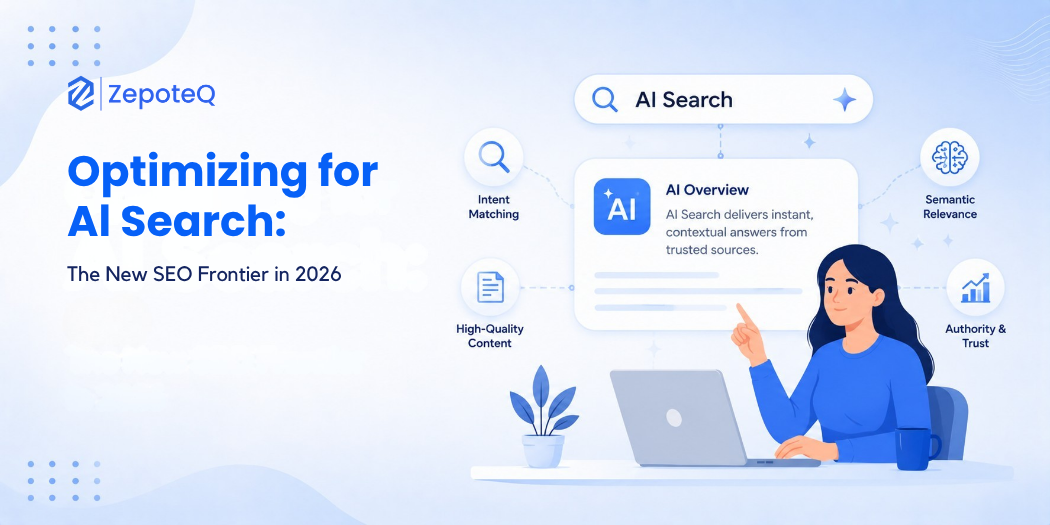
The world of search is changing faster than at any point since Google transformed the internet. For nearly two decades, businesses focused on ranking webpages through keywords, backlinks, and technical SEO improvements. Success was measured by achieving a position on the first page of search results.
In 2026, that model is rapidly evolving.
Search engines are no longer just indexing pages and matching keywords. They are becoming intelligent answer engines powered by Artificial Intelligence. Platforms such as Google AI Overviews, ChatGPT Search, Perplexity AI, Microsoft Copilot, Gemini, Claude, and other generative search tools are changing how users discover information.
Instead of typing simple keywords, users now ask complete questions.
Instead of clicking ten links, users often receive a complete answer immediately.
Instead of browsing multiple websites, AI systems summarize information and present recommendations directly.
This shift has created a completely new SEO landscape.
Businesses must now optimize not only for search engines but also for AI systems that generate answers.
This is why terms like AI Search Optimization, Answer Engine Optimization (AEO), Generative Engine Optimization (GEO), and Generative Video Optimization (GVO) have become essential parts of modern digital marketing strategies.
Welcome to the new SEO frontier.
Why Traditional SEO Is No Longer Enough
Traditional SEO focused heavily on:
- Keyword density
- Backlink building
- Meta tags
- Page optimization
- Search rankings
While these elements still matter, they are no longer enough on their own.
AI search platforms evaluate content differently.
They focus on:
- User intent
- Context
- Expertise
- Trustworthiness
- Content quality
- Direct answers
- Entity relationships
- Structured information
The objective is no longer simply ranking a page.
The objective is becoming the source AI systems choose to reference.
What Is Optimizing for AI Search?
AI Search uses large language models and machine learning to understand questions and generate meaningful answers.
Instead of providing a list of links, AI search platforms often provide:
- Direct answers
- Summaries
- Recommendations
- Comparisons
- Research insights
Examples include:
- Google AI Overviews
- ChatGPT Search
- Perplexity AI
- Gemini
- Claude
- Microsoft Copilot
These platforms are changing user behavior significantly.
Many users now receive answers without clicking traditional search results.
This trend is known as the Zero-Click Search Era.
The Rise of AI-First SEO
AI-First SEO is the practice of creating content that serves both human readers and AI systems.
Modern content must be:
- Easy to understand
- Well structured
- Factually accurate
- Highly authoritative
- User-focused
- Citation-friendly
Businesses that continue publishing keyword-stuffed content may struggle to gain visibility in AI-powered search environments.
The future belongs to content that genuinely helps users solve problems.
What is Answer Engine Optimization (AEO)?
AEO stands for Answer Engine Optimization.
Instead of optimizing content only for rankings, businesses optimize content to become the answer itself.
AEO focuses on:
- Featured snippets
- AI-generated answers
- Voice search
- Chat interfaces
- Zero-click searches
For example:
Instead of targeting:
“best CRM software”
You optimize for:
“What is the best CRM software for small businesses?”
AI systems prefer content that directly answers user questions.
How to Improve AEO
Provide Direct Answers
Answer important questions within the first few paragraphs.
Use FAQ Sections
Structured FAQs improve AI understanding.
Implement Schema Markup
Important schema types include:
- FAQ Schema
- HowTo Schema
- Article Schema
- Q&A Schema
Improve E-E-A-T Signals
Demonstrate:
- Experience
- Expertise
- Authoritativeness
- Trustworthiness
These signals help AI systems trust your content.
What is Generative Engine Optimization (GEO)?
Generative Engine Optimization focuses on optimizing content for AI-generated responses.
Instead of competing for a blue link, you compete to become a cited source.
GEO is becoming one of the most important SEO strategies for 2026.
AI platforms summarize information from trusted sources.
Your goal is to become one of those trusted sources.
GEO Best Practices
Publish Original Research
Unique data attracts AI citations.
Share Industry Insights
Expert opinions improve authority.
Use Clear Formatting
AI systems prefer:
- Bullet lists
- Tables
- Structured headings
- Well-organized content
Build Brand Authority
Strong brands are cited more frequently.
What is Generative Video Optimization (GVO)?
Video content is becoming increasingly important in AI search.
AI systems now analyze:
- Video transcripts
- Captions
- Spoken content
- Visual elements
Platforms such as YouTube are heavily integrated into AI search experiences.
This creates opportunities for businesses using video marketing.
How to Optimize Videos for AI Search
Answer Questions Early
Provide valuable information within the first 30 seconds.
Use Accurate Captions
Transcripts improve AI understanding.
Create Structured Videos
Use chapters and clear sections.
Optimize Titles
Descriptive titles help AI identify content topics.
AI Overviews: Google's Biggest Search Change
Google AI Overviews are changing search behavior dramatically.
Instead of presenting only traditional results, Google often displays:
- AI-generated summaries
- Recommended resources
- Consolidated answers
This means websites must optimize content for inclusion within AI-generated summaries.
Businesses appearing in AI Overviews often gain significant visibility.
Zero-Click Search Optimization
Users increasingly receive answers without visiting websites.
This trend is called Zero-Click Search.
To succeed:
- Become the source cited by AI
- Build strong brand recognition
- Publish expert-level content
- Focus on authority and trust
Visibility now matters as much as clicks.
When Should Businesses Choose Managed Teams?
Managed Teams are ideal for businesses that:
Need Rapid Scaling
Projects requiring immediate talent benefit from faster deployment.
Want Operational Simplicity
Providers handle administrative responsibilities.
Prioritize Flexibility
Managed Teams adapt quickly to changing requirements.
Focus on Core Business Functions
Organizations avoid operational distractions.
The Importance of E-E-A-T
Google and AI systems increasingly evaluate content based on:
Experience
Have you actually done what you’re writing about?
Expertise
Do you possess subject matter knowledge?
Authoritativeness
Are you recognized within your industry?
Trustworthiness
Can users trust your information?
Strong E-E-A-T improves both traditional SEO and AI search visibility.
Multi-Modal Search is the Future
Search is no longer limited to text.
Users now search using:
- Voice
- Images
- Video
- Text
- AI chat interfaces
Content must be optimized across all formats.
Businesses that invest in multi-modal content strategies will gain a competitive advantage.
Local SEO in the AI Era
Local search remains highly important.
AI systems increasingly answer questions like:
- Best restaurants near me
- Top digital marketing agencies
- Nearby clinics
- Local service providers
Businesses should:
- Optimize Google Business Profiles
- Collect reviews
- Publish local content
- Build local authority
This improves AI visibility for location-based searches.
How Businesses Should Prepare for AI Search
Create Helpful Content
Focus on solving real user problems.
Build Topic Authority
Develop deep expertise around specific topics.
Use Structured Data
Help AI understand your content.
Publish Original Insights
Unique content performs better than generic content.
Strengthen Brand Recognition
Strong brands receive more AI citations.
Common Mistakes to Avoid
Keyword Stuffing
AI systems prioritize quality over keyword repetition.
Thin Content
Short, low-value content performs poorly.
Ignoring User Intent
Understanding search intent is essential.
No Schema Markup
Structured data improves AI understanding.
Weak Authority Signals
Build trust through expertise and credibility.
What the Future Looks Like
The next generation of search will be dominated by:
- AI-generated answers
- Conversational search
- Personalized recommendations
- Voice assistants
- AI agents
- Multi-modal search experiences
Businesses that adapt early will gain a significant advantage.
Those relying solely on traditional SEO strategies may struggle to maintain visibility.
Conclusion
SEO is no longer just about rankings.
The future belongs to businesses that understand AI search behavior and optimize content for both people and intelligent systems.
Answer Engine Optimization, Generative Engine Optimization, Generative Video Optimization, AI Overviews, and AI-first content strategies are quickly becoming essential for online visibility.
In 2026 and beyond, success will come from becoming the most trusted, authoritative, and useful source of information in your industry.
The businesses that embrace AI Search Optimization today will be the ones leading digital visibility tomorrow.
FAQ's
1.What is AI Search Optimization?
AI Search Optimization is the process of creating content that can be easily understood, cited, and recommended by AI-powered search engines and answer platforms.
2.What is Answer Engine Optimization (AEO)?
AEO focuses on optimizing content to become the direct answer displayed in AI search results, featured snippets, and voice search responses.
3.What is Generative Engine Optimization (GEO)?
GEO helps content become a trusted source for AI-generated responses on platforms like ChatGPT, Perplexity, Gemini, and Claude.
4. Why is AI Search important for SEO in 2026?
AI Search is changing how users discover information, making visibility in AI-generated answers increasingly important for businesses.
How can websites appear in AI Overviews?
Websites can improve their chances by publishing authoritative content, using structured data, building trust signals, and directly answering user questions.