
Cloud 3.0 and Multi-Cloud Architectures: The Next Evolution of Scalable Software
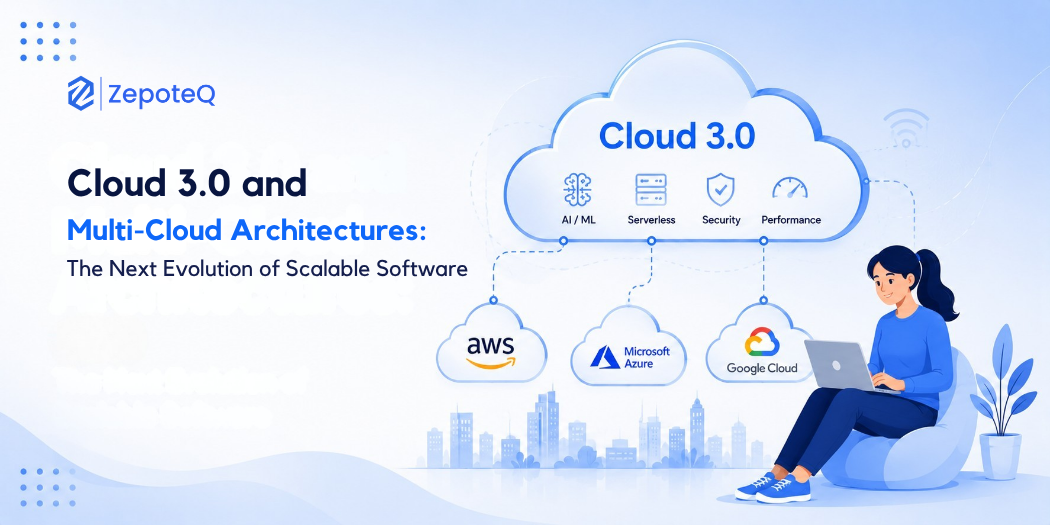
The world of cloud computing is evolving faster than ever. What started as simple cloud migration has now transformed into a complex ecosystem of distributed systems, AI-powered infrastructure, and multi-cloud environments.
Today, businesses are no longer asking “Should we move to the cloud?”
Instead, they are asking:
“How do we build a scalable, AI-ready, multi-cloud architecture that reduces cost and improves performance?”
This shift marks the arrival of Cloud 3.0, a new era of cloud computing where flexibility, intelligence, security, and scalability come together.
Companies like Zepoteq Business Solution are helping organizations adopt this next-generation architecture to build future-ready software systems.
What is Cloud 3.0?
Cloud 3.0 is the next stage of cloud evolution beyond traditional cloud and hybrid cloud systems.
Earlier cloud models focused on:
- Cloud migration (Cloud 1.0)
- Cloud-native development (Cloud 2.0)
But Cloud 3.0 introduces a more advanced approach:
Key Idea of Cloud 3.0:
Build systems that can intelligently run across multiple environments, clouds, and edge locations with built-in AI optimization.
It includes:
- Multi-cloud architecture
- Hybrid cloud systems
- Edge computing integration
- AI-driven automation
- Data sovereignty compliance
- Cost optimization (FinOps)
This makes Cloud 3.0 the foundation for modern scalable software systems.
Evolution of Cloud Computing
- Cloud 1.0 – Migration Era
Businesses moved servers to AWS, Azure, or Google Cloud.
- Cloud 2.0 – Cloud-Native Era
Focus shifted to containers, microservices, Kubernetes, and DevOps.
- Cloud 3.0 – Intelligent Distributed Cloud
Now systems are:
- Multi-cloud enabled
- AI-managed
- Cost-optimized
- Globally distributed
- Compliance-ready
This evolution is driven by AI workloads and global regulatory demands.
Why Cloud 3.0 is Needed Today
Modern businesses face major challenges:
- AI Workload Explosion
AI models require huge compute power, GPUs, and distributed systems.
- Rising Cloud Costs
Companies struggle with unpredictable billing and data transfer costs.
- Data Sovereignty Laws
Different countries require local data storage compliance.
- Performance Demands
Global users expect low-latency applications.
- System Complexity
Traditional cloud systems cannot handle modern-scale architecture alone.
Cloud 3.0 solves all these challenges using distributed intelligence and multi-cloud strategy.
What is Multi-Cloud Architecture?
Multi-cloud architecture means using multiple cloud providers like:
- AWS
- Microsoft Azure
- Google Cloud
- Private cloud systems
- Edge infrastructure
Instead of relying on a single provider, businesses distribute workloads intelligently.
Benefits of Multi-Cloud Architecture
- No Vendor Lock-in
Businesses are not dependent on one provider.
- Better Performance
Applications run closer to users globally.
- Improved Reliability
If one cloud fails, others continue working.
- Cost Optimization
Workloads can be shifted to cheaper infrastructure.
- Compliance Support
Different regions can store data locally.
Cloud 3.0 + Multi-Cloud = Modern Scalability
Cloud 3.0 combines multi-cloud architecture with:
- AI automation
- Edge computing
- Security-first design
- Real-time optimization
This creates systems that are:
- Smarter
- Faster
- More reliable
- More cost-efficient
Role of AI in Cloud 3.0
AI is one of the biggest drivers of Cloud 3.0.
Modern systems use AI for:
- Auto-scaling infrastructure
- Predicting traffic spikes
- Optimizing cost usage
- Managing workloads
- Detecting security threats
AI makes cloud systems self-managing and adaptive.
Zepoteq Business Solution in Cloud 3.0 Transformation
Zepoteq Business Solution helps businesses modernize their cloud infrastructure using Cloud 3.0 principles.
Zepoteq Services Include:
✔ Cloud architecture consulting
✔ Multi-cloud migration strategy
✔ AI-ready infrastructure design
✔ Hybrid cloud implementation
✔ Cost optimization (FinOps solutions)
✔ Scalable software architecture planning
Why Businesses Choose Zepoteq
Zepoteq focuses on building future-ready digital infrastructure.
Key Advantages:
- Scalable architecture design
- Secure cloud deployment
- AI integration support
- Performance optimization
- Enterprise-grade solutions
Zepoteq helps companies transition from traditional cloud systems to advanced Cloud 3.0 ecosystems.
Cloud 3.0 Architecture Components
- Distributed Infrastructure
Systems run across multiple clouds and regions.
- Edge Computing
Processing data closer to users.
- AI Automation Layer
Automates infrastructure management.
- Security Layer (Zero Trust)
No system is trusted by default.
- FinOps Layer
Tracks and optimizes cloud costs.
Benefits of Cloud 3.0 for Businesses
- Scalability
Handle millions of users easily.
- Cost Efficiency
Reduce unnecessary cloud spending.
- Faster Performance
Low-latency global applications.
- High Availability
Systems remain online even during failures.
- AI Optimization
Smart workload distribution.
Challenges in Cloud 3.0 Adoption
Even though Cloud 3.0 is powerful, it comes with challenges:
- Complex architecture design
- Skilled engineering requirement
- Integration difficulties
- Security management complexity
- Monitoring multiple environments
This is why expert guidance from companies like Zepoteq Business Solution becomes essential
Cloud 3.0 Use Cases
- E-commerce Platforms
Handle global traffic with low latency.
- AI Applications
Run large-scale AI models efficiently.
- Fintech Systems
Ensure compliance and data security.
- SaaS Platforms
Scale users globally without downtime.
- Healthcare Systems
Manage secure and compliant patient data.
Future of Cloud 3.0
The future of cloud computing will include:
- Fully autonomous cloud systems
- AI-managed infrastructure
- Zero manual scaling
- Global edge computing networks
- Real-time optimization engines
Cloud 3.0 will become the default architecture for all enterprise software.
Why Businesses Must Act Now
Companies that adopt Cloud 3.0 early will benefit from:
- Competitive advantage
- Lower operational costs
- Better system performance
- Stronger security posture
- Faster innovation cycles
Delaying adoption may result in outdated infrastructure and higher costs.
Conclusion
Cloud 3.0 represents a major shift in how software systems are designed and managed. It combines multi-cloud architecture, AI automation, edge computing, and cost optimization into a single intelligent ecosystem.
Businesses that want to stay competitive must move beyond traditional cloud systems and adopt modern Cloud 3.0 strategies.
With Zepoteq Business Solution, companies can seamlessly transition into this next-generation architecture and build scalable, secure, and AI-ready software systems for the future.
Conclusion
Both Build-Operate-Transfer and Managed Teams offer valuable pathways for accessing global technology talent in 2026.
The BOT model provides long-term ownership, strategic control, and sustainable offshore expansion opportunities. Meanwhile, Managed Teams deliver rapid scalability, operational simplicity, and reduced administrative burden.
Organizations should evaluate factors such as growth plans, ownership goals, operational capacity, budget, and time-to-market requirements before selecting a model.
As digital transformation accelerates and competition for talent intensifies, choosing the right engagement model can significantly impact business success. By partnering with experienced technology providers like Zepoteq, companies can build high-performing teams, accelerate innovation, and position themselves for long-term growth in an increasingly digital world.
FAQ's
1. What is Cloud 3.0 architecture?
Cloud 3.0 is the next generation of cloud computing that combines multi-cloud, hybrid cloud, AI automation, edge computing, and intelligent infrastructure management.
2. How does multi-cloud improve scalability?
Multi-cloud architecture improves scalability by distributing workloads across multiple cloud providers, ensuring better performance, reliability, and flexibility.
3. What is AI-ready cloud infrastructure?
AI-ready cloud infrastructure is designed to support AI applications with scalable compute resources, GPU processing, fast data access, and automated workload management.
4. Why is Cloud 3.0 important for businesses?
Cloud 3.0 helps businesses improve scalability, reduce cloud costs, enhance security, support AI innovation, and meet modern compliance requirements.
5. How does Zepoteq help in cloud transformation?
Zepoteq Business Solution helps organizations implement Cloud 3.0 strategies through cloud consulting, multi-cloud architecture, AI-ready infrastructure, cloud migration, and optimization services.