
CRM for Lead Management and Conversion: A Complete Growth Guide
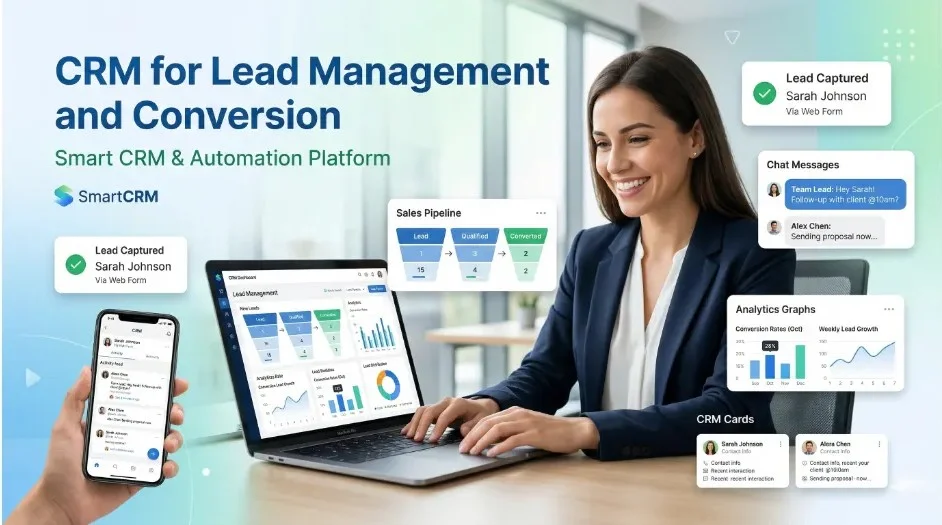
In today’s competitive digital landscape, businesses are constantly searching for ways to manage leads more effectively and convert them into paying customers. While generating leads is important, the real challenge lies in nurturing those leads and guiding them through the conversion journey. This is where a CRM for lead management and conversion becomes essential.
A well-implemented CRM system helps businesses organize, track, and optimize every interaction with potential customers. Instead of relying on scattered data or manual follow-ups, businesses can use CRM software to create a structured and automated process that improves both efficiency and results.
Platforms like ZepoteQ are designed to simplify this entire journey by combining lead management, customer engagement, and automation into one powerful system.
🧩 Understanding Lead Management in CRM
Lead management is the process of capturing, tracking, and nurturing potential customers until they are ready to make a purchase. Without a proper system, leads often get lost, ignored, or poorly managed, resulting in missed opportunities.
A CRM system acts as a centralized hub where all lead data is stored and managed. From the first interaction to final conversion, every step is recorded and accessible. This ensures that businesses have complete visibility into their sales pipeline.
With a CRM for small businesses, teams can prioritize leads, assign tasks, and track progress without confusion. This structured approach not only saves time but also increases the chances of conversion.
💡 Why CRM is Essential for Lead Conversion
Managing leads manually becomes increasingly difficult as a business grows. A CRM system solves this problem by introducing automation and organization into the process.
Some of the key benefits include:
- Better tracking of customer interactions
- Automated follow-ups and reminders
- Improved team collaboration
These features ensure that no lead is forgotten and every opportunity is maximized. By using a lead management CRM, businesses can move leads smoothly through the funnel and convert them into loyal customers.
🔷 How CRM Improves Lead Management
A CRM system does more than just store data—it actively improves how leads are handled. It creates a structured workflow that ensures every lead receives the right attention at the right time.
For example, when a new lead enters the system, it can be automatically assigned to a sales representative. Follow-up reminders can be scheduled, and communication can be tracked in one place.
This level of organization helps businesses:
- Respond faster to leads
- Maintain consistent communication
- Avoid duplicate or missed entries
With tools like Zeposuite CRM, businesses can manage leads more efficiently while reducing manual effort.
🔄 From Lead Capture to Conversion
The journey from lead generation to conversion involves multiple stages. A CRM system ensures that each stage is handled properly, creating a smooth and effective process.
It starts with capturing leads through various channels such as websites, ads, or messaging platforms. Once captured, the CRM stores all relevant information and begins the nurturing process.
As leads move through the funnel, businesses can track their behavior, preferences, and interactions. This allows for personalized communication, which significantly increases conversion rates.
Instead of treating all leads the same, a CRM for lead conversion helps businesses tailor their approach based on data and insights.
💬 Role of Automation in CRM
Automation is one of the most powerful features of modern CRM systems. It eliminates repetitive tasks and ensures that processes run smoothly without constant manual intervention.
With automation, businesses can:
- Send instant responses to new leads
- Schedule follow-up messages
- Trigger actions based on customer behavior
This not only saves time but also improves consistency. Leads receive timely communication, which keeps them engaged and increases the likelihood of conversion.
Zepoteq enhances this experience by integrating automation with communication channels like WhatsApp, making engagement faster and more effective.
📊 Data-Driven Decision Making
One of the biggest advantages of using a CRM system is access to real-time data and analytics. Businesses can track key metrics such as lead sources, conversion rates, and sales performance.
This data helps identify what is working and what needs improvement. For example, if a particular campaign is generating high-quality leads, businesses can invest more in that channel.
A CRM for lead management provides insights that allow businesses to make smarter decisions, optimize strategies, and improve overall performance.
⚙️ CRM for Small Business Growth
Small businesses often struggle with limited resources and manual processes. A CRM system helps overcome these challenges by providing a scalable solution that grows with the business.
Instead of hiring large teams, businesses can rely on automation and structured workflows to manage leads efficiently. This reduces operational costs while improving productivity.
With platforms like Zepoteq, small businesses can access advanced CRM features without complexity, making it easier to compete in a digital-first environment.
🔗 Integration with Marketing and Sales
A CRM system works best when it is integrated with marketing and sales tools. This ensures that all departments are aligned and working toward the same goals.
For example, marketing teams can generate leads through campaigns, while sales teams can manage and convert those leads within the CRM. This creates a seamless flow from lead generation to conversion.
Key advantages of integration include:
- Better alignment between teams
- Improved lead quality
- Faster conversion cycles
This connected approach ensures that businesses can maximize the value of every lead.
📈 Real Impact on Business Performance
Implementing a CRM system has a direct impact on business growth. By improving lead management and conversion processes, businesses can achieve better results with less effort.
Some of the measurable benefits include:
- Higher conversion rates
- Improved customer engagement
- Increased revenue
When leads are managed properly, businesses can build stronger relationships and create long-term value.
🌍 The Future of CRM and Lead Conversion
The future of CRM lies in automation, personalization, and real-time engagement. As technology continues to evolve, businesses will rely more on intelligent systems to manage customer relationships.
Platforms like Zepoteq are leading this transformation by combining CRM, automation, and communication into a single ecosystem. This allows businesses to stay ahead of the competition and adapt to changing customer expectations.
In a world where speed and personalization matter, having the right CRM system is no longer optional—it is essential.
🏁 Conclusion
A CRM for lead management and conversion is one of the most powerful tools a business can use to drive growth. It helps organize data, automate processes, and improve communication, ensuring that every lead is handled effectively.
By using a platform like Zepoteq, businesses can simplify their workflows, increase efficiency, and convert more leads into customers. This not only improves short-term results but also builds a strong foundation for long-term success.
🎯 Simple Final Understanding
A CRM system helps businesses manage leads efficiently and convert them into customers through structured processes and automation.
It improves communication, reduces manual work, and provides valuable insights for growth.
With Zepoteq, businesses can create a complete lead-to-conversion system that drives consistent results.