
Why SaaS Platform Scalability Is Essential for Business Growth
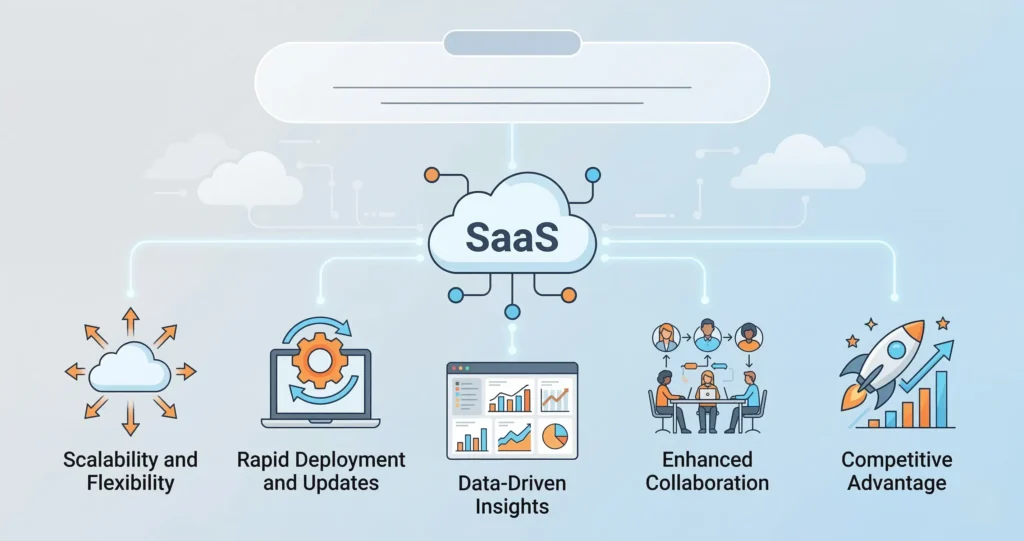
Business growth always begins with a vision. Startups launch with ambitious goals, teams expand, customers increase, and operations become more complex over time. But growth also brings new challenges, especially when the tools and systems supporting your business cannot keep up.
This is why SaaS platform scalability has become a critical factor for modern businesses. A scalable SaaS platform ensures that your software infrastructure can handle increasing users, transactions, and workloads without sacrificing performance or reliability.
The global SaaS market is expanding rapidly and is expected to reach over $1 trillion by 2032. Companies across industries are moving toward cloud-based platforms because they provide flexibility, efficiency, and long-term scalability.
However, not all SaaS platforms are built for growth. Choosing a scalable platform today ensures your business will continue to operate smoothly tomorrow.
What Is Business Scalability?
Business scalability refers to a company’s ability to grow without being limited by its systems, processes, or infrastructure.
A scalable business can handle:
More users
More transactions
Larger volumes of data
Expanded product offerings
Growth across different markets
Without scalable systems, companies often struggle with slow performance, technical limitations, and expensive system migrations.
When applied to SaaS, scalability means the software platform can evolve as the business expands. Instead of replacing systems every few years, businesses can rely on a scalable SaaS platform that adapts to their growth.
There are two main forms of scalability:
Scaling Up
Increasing the system capacity by adding more computing power or resources.
Scaling Out
Expanding system capability by distributing workloads across multiple servers or services.
Modern SaaS platforms combine both strategies to ensure stable and efficient performance.
Why SaaS Platform Scalability Matters
Scalability in SaaS platforms is not just a technical advantage; it directly impacts business success.
1. Cost Efficiency
Many businesses start with small software solutions that work initially but become expensive to maintain as the company grows.
Non-scalable systems often require:
expensive upgrades
complex system migrations
rebuilding workflows
A scalable SaaS platform avoids these disruptions by expanding gradually as your business grows.
2. Business Agility
A scalable platform enables businesses to respond quickly to market changes.
For example, companies can:
launch new features
expand into new markets
onboard more employees
support increased customer demand
Without scalable systems, these changes become slow and expensive.
3. Operational Stability
Growth should not create operational chaos.
A well-designed SaaS platform maintains performance even when demand increases significantly. This means fewer outages, smoother workflows, and improved productivity for teams.
4. Long-Term Business Value
Investing in a scalable SaaS platform is a strategic decision. Instead of repeatedly replacing software tools, businesses build a technology foundation that supports growth for many years.
Signs of a Truly Scalable SaaS Platform
Not every SaaS product is built with scalability in mind. Businesses should evaluate several factors before choosing a platform.
Flexible User Expansion
Scalable SaaS platforms allow companies to add users, roles, and features without major system changes.
Whether a company grows from 10 employees to 1,000, the platform should continue working seamlessly.
High Performance Under Load
A scalable SaaS system maintains performance even when traffic, data, or user activity increases dramatically.
This ensures customers and employees always experience fast and reliable software.
Integration-Ready Architecture
Modern businesses rely on multiple tools such as CRM systems, analytics platforms, and marketing software.
A scalable SaaS platform must integrate smoothly with existing tools and future technologies.
Modular Feature Expansion
Modular platforms allow businesses to activate new features only when needed.
This provides two key advantages:
lower initial costs
easier long-term expansion
Automation and Workflow Support
As businesses scale, operations become more complex. Automation helps reduce manual work and maintain efficiency.
Scalable SaaS platforms include workflow automation features that help teams manage growth effectively.
Risks of Ignoring SaaS Scalability
Failing to prioritize scalability can create serious business challenges.
Expensive System Migrations
Businesses often discover too late that their software cannot handle increased demand. Migrating to new systems can be expensive and disruptive.
Slower Growth
Companies may miss opportunities to expand because their systems cannot support larger operations.
Poor Customer Experience
When systems become slow or unstable, customers lose trust in the brand.
Security Risks
As businesses grow, security requirements also increase. Non-scalable systems may lack the infrastructure needed to protect sensitive data.
Benefits of Choosing a Scalable SaaS Platform Early
Prioritizing scalability from the beginning provides long-term advantages.
Seamless Business Growth
Companies can expand their operations without worrying about system limitations.
Predictable Costs
Scalable SaaS platforms often use flexible pricing models where businesses pay only for the resources they use.
Improved Productivity
Employees can continue using the same platform as the company grows instead of constantly switching tools.
Better Customer Experience
Fast and reliable systems improve customer satisfaction and brand loyalty.
How ZepoteQ Helps Build Scalable SaaS Platforms
At ZepoteQ, we help businesses design and develop scalable SaaS solutions built for long-term growth.
Our SaaS development approach focuses on:
scalable cloud infrastructure
microservices architecture
DevOps automation
performance optimization
secure cloud deployment
By combining modern SaaS architecture with scalable cloud technologies, ZepoteQ ensures that businesses can grow without technical limitations.
Conclusion
SaaS platform scalability is no longer optional. It is a fundamental requirement for companies that want to grow efficiently and remain competitive in a rapidly evolving digital economy.
A scalable SaaS platform allows businesses to handle increasing workloads, expand into new markets, and maintain consistent performance without costly disruptions.
Instead of choosing software that works only for today, businesses should invest in platforms that support tomorrow’s growth.
With the right technology partner and scalable SaaS architecture, companies can build a strong foundation for long-term success.